
HomeInformation CenterIndustry News
NEWS CENTER

Information Center

Focusing on fire safety industry trends, policies, regulations, and technological frontiers, we consistently provide you with authoritative and professional information.

10Fire Safety Knowledge
8Information
PinnedIndustry NewsLatest
SINOWOAN First Aid Kit & First Aid Box Science Guide
Author:Zhejiang Sinowoan Technology Co., Ltd.Published Updated 194 阅读About 5 minutes
First Aid KitEmergency First Aid BoxEmergency First AidProduct SelectionUsage GuideStorage Tips

SINOWOAN SINOWOAN First Aid Kit & First Aid Box Guide

I. Differences & Comparison of Multiple First Aid Kits / First Aid Boxes

SINOWOAN first aid products are divided into portable first aid kits and wall-mounted first aid boxes, suitable for scenarios such as homes, cars, corporate offices, construction sites, schools, etc., used for wound hemostasis, bandaging and fixation, and emergency medical care.

Table

Product Name

Box Material

Core Configuration

Product Features

Limitations

Applicable Scenarios

Home Portable First Aid Kit (Soft Bag Type)

Thickened waterproof Oxford cloth soft bag

Disposable gloves, iodophor cotton pads, hemostatic gauze, band-aids, elastic bandages, tourniquets, medical scissors, cold compress bags, first aid manual

Compact size, flexible storage; waterproof fabric; complete accessories, suitable for family bumps, cuts, abrasions; can be placed in lockers / entryways

Limited capacity, cannot store large fixed splints; soft bag is prone to squeezing internal accessories

Residential homes, homestays, short outdoor trips

Vehicle First Aid Kit

Wear-resistant Oxford cloth, shock-absorbing compartments

Hemostasis kit, first aid bandages, band-aids, iodophor pads, tourniquets, reflective triangular stickers, disposable masks, adapted to small car interior spaces

Shock-resistant, compartmentalized design prevents accessories from being scattered; compact, can be placed in trunk, armrest box; suitable for emergency care for traffic accident injuries

Reduced number of accessories, no large fixed equipment; high temperatures in cars will accelerate expiration of consumables

Private cars, online car-hailing vehicles, logistics vehicles for on-board emergency use

Wall-Mounted First Aid Box (Corporate Type)

ABS hard engineering plastic box, wall mounting holes

Large capacity, includes full set of bandaging supplies, medical splints, CPR masks, tourniquets, various dressings, disposable gloves, disinfection supplies, first aid checklist

Hard box resists squeezing; supports wall mounting, easy to access; rich accessories, suitable for simultaneous care of multiple people; comes with inventory checklist

Large size, inconvenient to carry; requires wall drilling for installation

Factories, office buildings, schools, shopping malls, property duty rooms

Mini Pocket First Aid Kit

Ultra-thin Oxford cloth small bag

Band-aids, disinfection cotton pads, small bandages

Ultra-light and portable, fits in pockets; low price, quick treatment for small wounds

Only suitable for minor abrasions, no accessories for severe trauma care

Employee carry-on, outdoor hiking, study tours

Purchase Summary: For daily home emergencies, choose a portable home first aid kit; for vehicles, use a car first aid kit; for crowded scenarios like companies, factories, and schools, prioritize an ABS wall-mounted first aid cabinet; for personal minor wound protection, choose a mini first aid kit. Important Reminder: First aid kits are only for on-site temporary emergency response; for critical conditions such as severe injuries, heavy bleeding, fractures, or unconsciousness, call 120 immediately. They cannot replace professional medical treatment at hospitals.

II. Correct Usage and Operation Methods (Five Steps for Trauma Emergency: Safety, Call, Stop, Bandage, Immobilize)

Title: Fire Safety Science · Five-Step Operation for First Aid Kit Emergency Response

1. Safety: Secure the Scene Confirm the environment is safe, stay away from hazards such as fires, traffic, and collapses to avoid injury to the rescuer, and quickly assess the victim’s consciousness.

2. Call: Emergency Assistance If the victim’s injuries are severe, call 120 immediately, and call for help from people nearby if necessary.

3. Stop: Control Bleeding For bleeding wounds, press with gauze to stop bleeding; for heavy limb bleeding, use a tourniquet and mark the time of application.

4. Bandage: Protect the Wound Disinfect the wound with iodophor pads, bandage with adhesive bandages / gauze + elastic bandage, adjust the bandage to be snug without blocking blood circulation in the limb.

5. Immobilization: Fixed Protection If a fracture is suspected, use a splint to immobilize the injured limb to reduce secondary injury caused by movement, and wait for medical personnel to arrive.

Dark blue bottom prompt bar:For on-site first aid only; do not move patients with severe trauma, internal organ injuries, or unconscious patients at will; strictly record the application time of tourniquets.

III. Key Points for Use and Storage

Precautions for Use

1. Before using consumables, check that the individual packaging is intact; dressings that are damaged or opened are prohibited from use.

2. Iodophor and alcohol prep pads are for skin surface disinfection only; do not get them in eyes or mouth.

3. Tourniquets must not be applied directly against the skin; after applying a tourniquet, the time must be marked, and it must be loosened on schedule to prevent limb necrosis.

4. Disposable medical consumablesmust not be reused after use; dressings that come into contact with blood or body fluids shall be disposed of in accordance with medical waste regulations.

5. First aid kits cannot be used as medicine storage boxes, and it is not recommended to store oral medications.

Storage Guidelines

1. Place in a dry, ventilated area at room temperature away from light, avoiding direct sunlight and high temperatures; vehicle-mounted first aid kits should be kept away from prolonged exposure to sunlight inside the car.

2. Keep first aid kits/boxes sealed to prevent moisture, and stay away from lampblack, acid and alkali corrosive items.

3. Wall-mounted first aid boxes should be installed at a moderate height, in a visible and easily accessible location. Do not lock them, or if locked, keep the key nearby to allow quick access in emergencies.

4. Regularly inform family members and staff of the location of first aid supplies and basic usage methods.

IV. Daily Inspection and Scraping Standards

Daily Inspection (it is recommended to take inventory quarterly and conduct a full verification annually)

1. Consumables Inspection: Check dressings, iodophor wipes, band-aids, and disposable gloves one by one, and verify their expiration dates; ensure individual packaging is intact, with no moisture, mold, or leakage.

2. Accessory Inspection: Elastic bandages, tourniquets, splints, medical scissors, and CPR masks are in good condition with no aging or cracking; the scissors open and close smoothly.

3. Case / Bag: The Oxford cloth bag has no tears or damage; the ABS first aid kit case has no cracks, and the latch opens and closes normally.

4. Supply List and Labels: The supply list inside the case is complete, product labels are clear, and the types of supplies can be verified.

If any of the following occurs, the corresponding consumables / the entire first aid kit must be replaced

1. Medical consumables such as disinfectant supplies, gauze, and band-aids are expired, or their packaging is damaged, damp, or moldy.

2. Elastic bandages are aged and lose elasticity; tourniquets are cracked; splints are broken; CPR masks are damaged.

3. The case/package is severely damaged, unable to protect the internal supplies, and the latches are broken and cannot be closed.

4. First aid supplies have been used up and not replenished in a timely manner; in case of contamination (blood, chemical contamination), the entire set must be replaced.

5. The label has fallen off, making it impossible to identify the supply list and expiration date.

Science Note: The hard case of a first aid kit can be reused for a long time. All internal medical consumables have expiration dates; when they expire, you only need to replace the consumables separately, there is no need to discard the entire case directly.

V. Selection Science Summary

1. Home emergency: Portable soft bag for household use, stored in the foyer or locker, for common household injuries such as cuts and bumps;

2. Vehicle on-board: On-board first aid kit with shockproof design, suitable for simple first aid at traffic accident scenes;

3. Enterprises, schools, factories: ABS wall-mounted first aid kit, large-capacity wall-mounted storage, to meet the emergency first aid needs of multiple people;

4. Personal items: Mini first aid kit for treating minor abrasions;

Important principle: A first aid kit is only a temporary aid tool. For serious injuries, call 120 immediately and seek medical attention as soon as possible.

Related Information

New energy vehicle fires: Escape window may only be a few minutes — On-vehicle fire safety equipment configuration guide
Fire Safety Knowledge2026-10-21
The world's first mass-produced, with extended fire resistance rating...
Company News2026-10-07
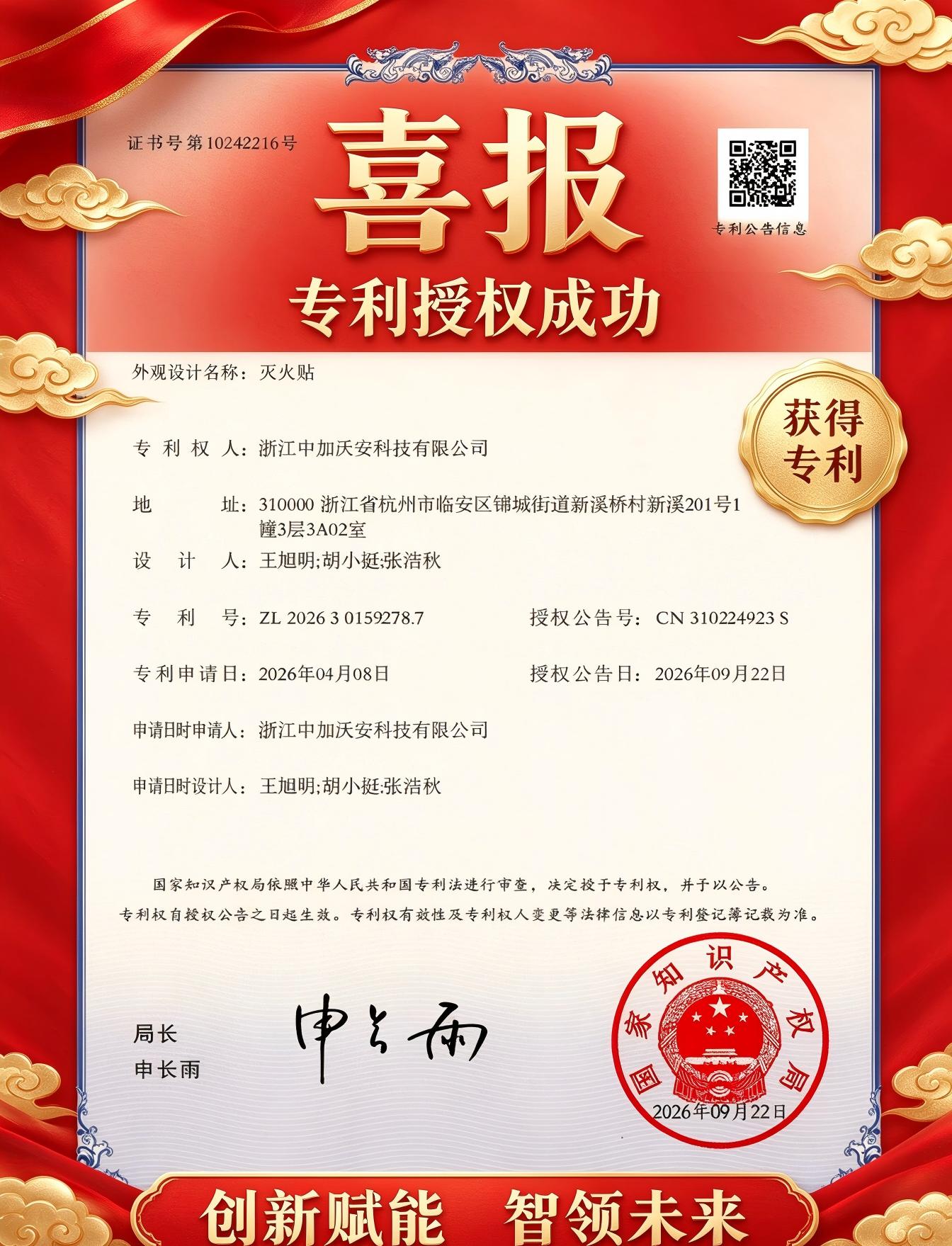
Good News | Zhejiang Zhongjiawoan Technology adds another intellectual property achievement
Information2026-09-29
HomeProductInformationContact
HomeInformation CenterIndustry News
NEWS CENTER

Information Center

Focusing on fire safety industry trends, policies, regulations, and technological frontiers, we consistently provide you with authoritative and professional information.

10Fire Safety Knowledge
8Information
PinnedIndustry NewsLatest

SINOWOAN First Aid Kit & First Aid Box Science Guide

Author:Zhejiang Sinowoan Technology Co., Ltd.Published Updated
194 阅读
Estimated reading time 5 minutes
Tags:First Aid KitEmergency First Aid BoxEmergency First AidProduct SelectionUsage GuideStorage Tips

SINOWOAN SINOWOAN First Aid Kit & First Aid Box Guide

I. Differences & Comparison of Multiple First Aid Kits / First Aid Boxes

SINOWOAN first aid products are divided into portable first aid kits and wall-mounted first aid boxes, suitable for scenarios such as homes, cars, corporate offices, construction sites, schools, etc., used for wound hemostasis, bandaging and fixation, and emergency medical care.

Table

Product Name

Box Material

Core Configuration

Product Features

Limitations

Applicable Scenarios

Home Portable First Aid Kit (Soft Bag Type)

Thickened waterproof Oxford cloth soft bag

Disposable gloves, iodophor cotton pads, hemostatic gauze, band-aids, elastic bandages, tourniquets, medical scissors, cold compress bags, first aid manual

Compact size, flexible storage; waterproof fabric; complete accessories, suitable for family bumps, cuts, abrasions; can be placed in lockers / entryways

Limited capacity, cannot store large fixed splints; soft bag is prone to squeezing internal accessories

Residential homes, homestays, short outdoor trips

Vehicle First Aid Kit

Wear-resistant Oxford cloth, shock-absorbing compartments

Hemostasis kit, first aid bandages, band-aids, iodophor pads, tourniquets, reflective triangular stickers, disposable masks, adapted to small car interior spaces

Shock-resistant, compartmentalized design prevents accessories from being scattered; compact, can be placed in trunk, armrest box; suitable for emergency care for traffic accident injuries

Reduced number of accessories, no large fixed equipment; high temperatures in cars will accelerate expiration of consumables

Private cars, online car-hailing vehicles, logistics vehicles for on-board emergency use

Wall-Mounted First Aid Box (Corporate Type)

ABS hard engineering plastic box, wall mounting holes

Large capacity, includes full set of bandaging supplies, medical splints, CPR masks, tourniquets, various dressings, disposable gloves, disinfection supplies, first aid checklist

Hard box resists squeezing; supports wall mounting, easy to access; rich accessories, suitable for simultaneous care of multiple people; comes with inventory checklist

Large size, inconvenient to carry; requires wall drilling for installation

Factories, office buildings, schools, shopping malls, property duty rooms

Mini Pocket First Aid Kit

Ultra-thin Oxford cloth small bag

Band-aids, disinfection cotton pads, small bandages

Ultra-light and portable, fits in pockets; low price, quick treatment for small wounds

Only suitable for minor abrasions, no accessories for severe trauma care

Employee carry-on, outdoor hiking, study tours

Purchase Summary: For daily home emergencies, choose a portable home first aid kit; for vehicles, use a car first aid kit; for crowded scenarios like companies, factories, and schools, prioritize an ABS wall-mounted first aid cabinet; for personal minor wound protection, choose a mini first aid kit. Important Reminder: First aid kits are only for on-site temporary emergency response; for critical conditions such as severe injuries, heavy bleeding, fractures, or unconsciousness, call 120 immediately. They cannot replace professional medical treatment at hospitals.

II. Correct Usage and Operation Methods (Five Steps for Trauma Emergency: Safety, Call, Stop, Bandage, Immobilize)

Title: Fire Safety Science · Five-Step Operation for First Aid Kit Emergency Response

1. Safety: Secure the Scene Confirm the environment is safe, stay away from hazards such as fires, traffic, and collapses to avoid injury to the rescuer, and quickly assess the victim’s consciousness.

2. Call: Emergency Assistance If the victim’s injuries are severe, call 120 immediately, and call for help from people nearby if necessary.

3. Stop: Control Bleeding For bleeding wounds, press with gauze to stop bleeding; for heavy limb bleeding, use a tourniquet and mark the time of application.

4. Bandage: Protect the Wound Disinfect the wound with iodophor pads, bandage with adhesive bandages / gauze + elastic bandage, adjust the bandage to be snug without blocking blood circulation in the limb.

5. Immobilization: Fixed Protection If a fracture is suspected, use a splint to immobilize the injured limb to reduce secondary injury caused by movement, and wait for medical personnel to arrive.

Dark blue bottom prompt bar:For on-site first aid only; do not move patients with severe trauma, internal organ injuries, or unconscious patients at will; strictly record the application time of tourniquets.

III. Key Points for Use and Storage

Precautions for Use

1. Before using consumables, check that the individual packaging is intact; dressings that are damaged or opened are prohibited from use.

2. Iodophor and alcohol prep pads are for skin surface disinfection only; do not get them in eyes or mouth.

3. Tourniquets must not be applied directly against the skin; after applying a tourniquet, the time must be marked, and it must be loosened on schedule to prevent limb necrosis.

4. Disposable medical consumablesmust not be reused after use; dressings that come into contact with blood or body fluids shall be disposed of in accordance with medical waste regulations.

5. First aid kits cannot be used as medicine storage boxes, and it is not recommended to store oral medications.

Storage Guidelines

1. Place in a dry, ventilated area at room temperature away from light, avoiding direct sunlight and high temperatures; vehicle-mounted first aid kits should be kept away from prolonged exposure to sunlight inside the car.

2. Keep first aid kits/boxes sealed to prevent moisture, and stay away from lampblack, acid and alkali corrosive items.

3. Wall-mounted first aid boxes should be installed at a moderate height, in a visible and easily accessible location. Do not lock them, or if locked, keep the key nearby to allow quick access in emergencies.

4. Regularly inform family members and staff of the location of first aid supplies and basic usage methods.

IV. Daily Inspection and Scraping Standards

Daily Inspection (it is recommended to take inventory quarterly and conduct a full verification annually)

1. Consumables Inspection: Check dressings, iodophor wipes, band-aids, and disposable gloves one by one, and verify their expiration dates; ensure individual packaging is intact, with no moisture, mold, or leakage.

2. Accessory Inspection: Elastic bandages, tourniquets, splints, medical scissors, and CPR masks are in good condition with no aging or cracking; the scissors open and close smoothly.

3. Case / Bag: The Oxford cloth bag has no tears or damage; the ABS first aid kit case has no cracks, and the latch opens and closes normally.

4. Supply List and Labels: The supply list inside the case is complete, product labels are clear, and the types of supplies can be verified.

If any of the following occurs, the corresponding consumables / the entire first aid kit must be replaced

1. Medical consumables such as disinfectant supplies, gauze, and band-aids are expired, or their packaging is damaged, damp, or moldy.

2. Elastic bandages are aged and lose elasticity; tourniquets are cracked; splints are broken; CPR masks are damaged.

3. The case/package is severely damaged, unable to protect the internal supplies, and the latches are broken and cannot be closed.

4. First aid supplies have been used up and not replenished in a timely manner; in case of contamination (blood, chemical contamination), the entire set must be replaced.

5. The label has fallen off, making it impossible to identify the supply list and expiration date.

Science Note: The hard case of a first aid kit can be reused for a long time. All internal medical consumables have expiration dates; when they expire, you only need to replace the consumables separately, there is no need to discard the entire case directly.

V. Selection Science Summary

1. Home emergency: Portable soft bag for household use, stored in the foyer or locker, for common household injuries such as cuts and bumps;

2. Vehicle on-board: On-board first aid kit with shockproof design, suitable for simple first aid at traffic accident scenes;

3. Enterprises, schools, factories: ABS wall-mounted first aid kit, large-capacity wall-mounted storage, to meet the emergency first aid needs of multiple people;

4. Personal items: Mini first aid kit for treating minor abrasions;

Important principle: A first aid kit is only a temporary aid tool. For serious injuries, call 120 immediately and seek medical attention as soon as possible.

Related InformationRecommended for you