
HomeInformation CenterFire Safety Knowledge
NEWS CENTER

Information Center

Focusing on fire safety industry trends, policies, regulations, and technological frontiers, we consistently provide you with authoritative and professional information.

9Fire Safety Knowledge
2Information
PinnedFire Safety KnowledgeLatest

Kitchen Fire Safety Equipment Purchasing Guide

2026-06-0490 阅读About 5 minutes

I. Introduction

Kitchens are the most common fire-prone areas in homes and businesses. Grease fires (Class F cooking oil fires) account for over 65% of residential fires. Cooking oil has a high flash point, is highly flammable, and must never be extinguished with water. Incorrect extinguishing methods can easily lead to splash burns and even cause the fire to spread throughout the entire house. With the implementation of the new national standards GB4351 and XF1205 in 2026, household kitchen fire safety equipment has become standardized. This article provides a comprehensive overview of selection criteria, equipment classification, reputable brands, and optimal configurations, aiming to help consumers accurately choose compliant and efficient cooking oil fire extinguishing equipment for various scenarios, including owner-occupied homes, rental properties, and street-side restaurants.

II. Mandatory National Standards for Kitchen Fire Extinguishing Equipment Selection

When purchasing anykitchen fire extinguishing product, the first thing to check is the 3C mandatory fire certification and the national standard number. Products without certification will not pass fire inspections and cannot guarantee extinguishing effectiveness in the event of a fire.

1. Fire Extinguisher / Kitchen-Specific Water-Based Fire Extinguisher complies with the new national standard GB4351-2025, 3C certified, suitable for Class F cooking oil fires, with the dual functions of cooling and oxygen isolation, which can suppress re-ignition of oil in the pot;

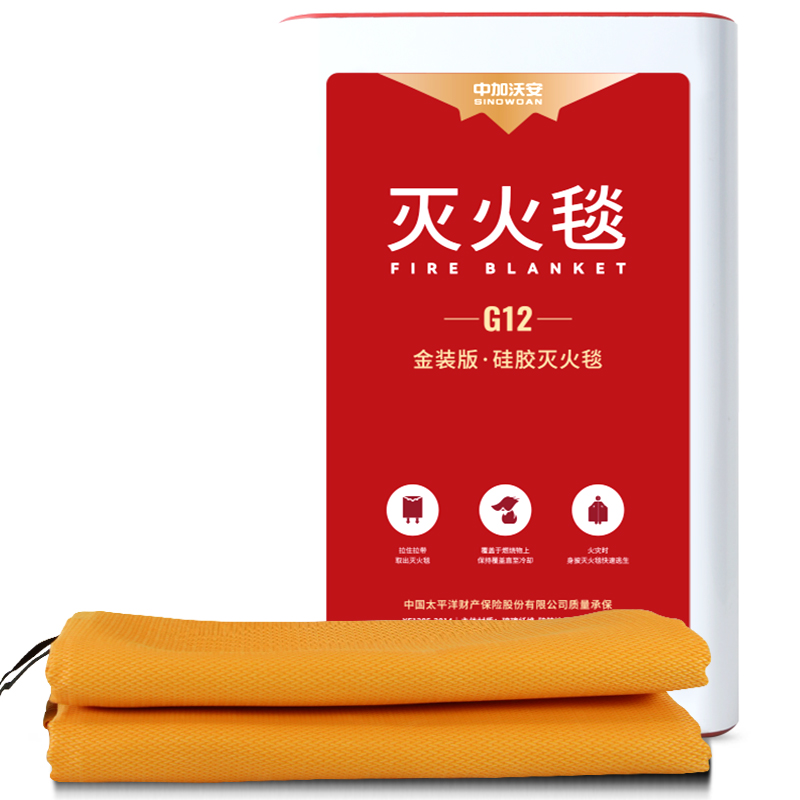
2. Fire Blanket : XF1205-2014 National Standard, household preferred silicone-coated fiberglass material, temperature resistance ≥550℃, advanced models can withstand temperatures up to 1300℃;

3. Household Gas Alarm complies with GB15322.2-2019 National Standard + 3C certification, kitchen-specific anti-gas leak and explosion early warning system;

4. Kitchen-Specific Fire Extinguisher : Class K / Water-based extinguishing agent. It is not recommended to spray ordinary dry powder directly into an oil pan (this can easily cause hot oil to overflow and spread the fire). Jiangsu Fire and Rescue Team.

Three Key Principles for Choosing Lightning Protection Devices

① Cheap, substandard products: lacking 3C certification, fire safety identification and traceability codes, and containing expired or ineffective extinguishing agents;

② Incorrect product category: It is not recommended to use ABC dry powder extinguishers as the primary extinguisher for oil pan fires, as direct spraying onto the oil surface can easily cause hot oil to splash.

③ Size misconception: The preferred size for household fire blankets is 1 meter × 1.2 meters. If the size is too small, it cannot completely cover the oil pan.

III. Classification and Applicable Scenarios of Four Core Kitchen Fire Extinguishing Devices

1.Fire Extinguisher(Best choice for extinguishing oil pan fires in 2026, best-selling household product)

Scope of application: Small oil pan fires, stove oil fires, and fires caused by small electrical appliances (applicable to all Class F/A/B/E fires). This product is lightweight and portable; seniors and children can operate it with just a press of a button, no professional skills required. The sprayed foam quickly covers high-temperature grease, lowering its temperature and preventing re-ignition.

2.Silicone Coated Fire Blanket(Essential item, no expiration date)

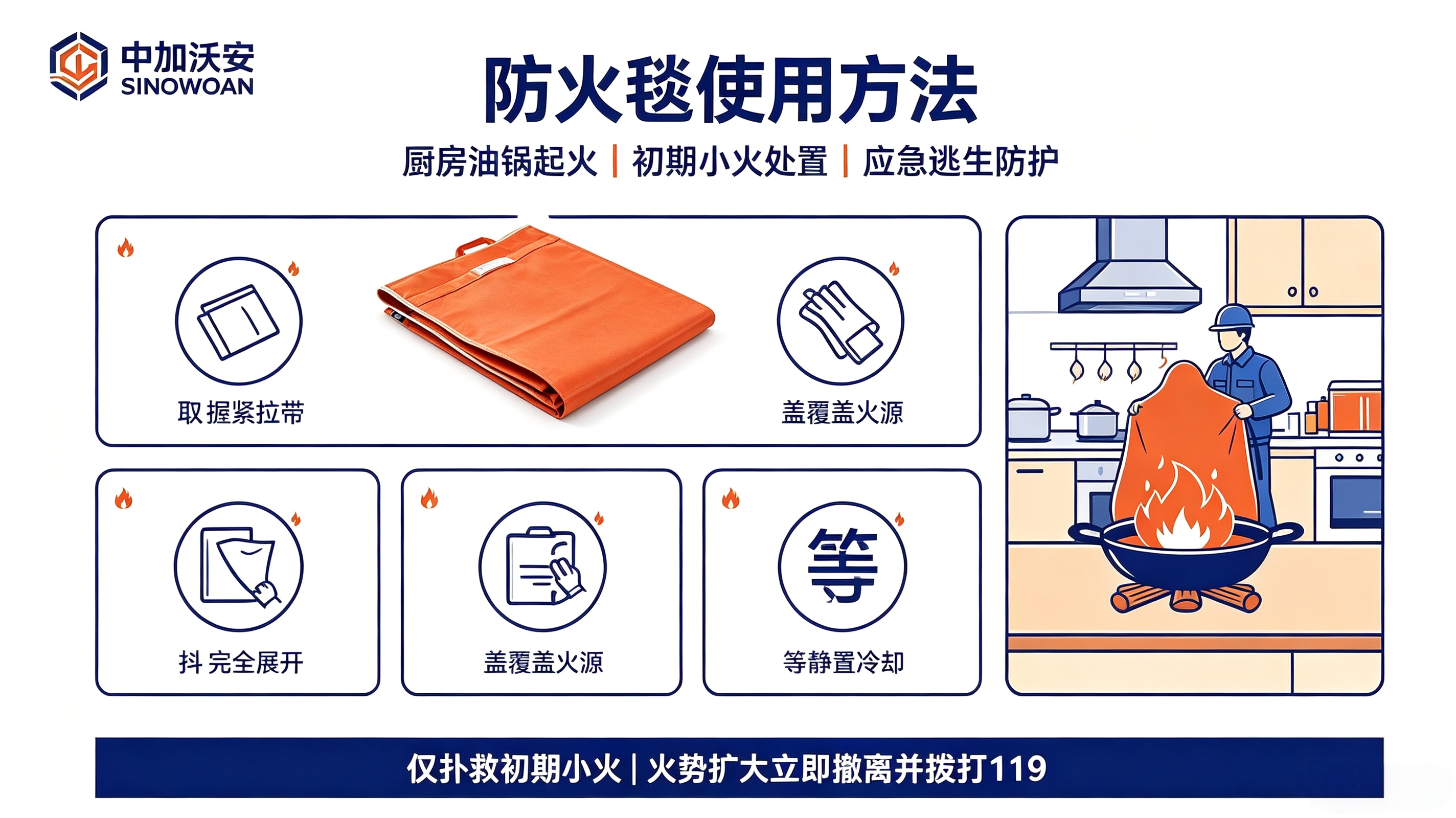
Scope of application: Small oil pan fires, can be extinguished within 30 seconds; when a person is on fire, they can wrap themselves to escape the flames; compact storage; can be wall-mounted next to the stove; simply pull it open to cover the pot, isolating oxygen to extinguish the fire; high-quality silicone does not stick to open flames; reusable.

3. Class F Water-Based Kitchen Fire Extinguisher(Backup extinguisher for large fires)

Applicable to: Spreading oil fires, cabinet fires, and other flammable material fires. Water-based extinguishers have a powerful cooling effect, preventing grease from re-igniting. For household use, 1-2 liter portable versions can be chosen; for catering establishments, 3-4 liter versions can be chosen.

4.Natural Gas Alarm(Early warning, first line of defense against fire)

Application scope: Kitchen gas leak warning [... truncated 1138 chars ...]

(III) Brands of Water-Based Fire Extinguishers Specifically for Kitchens

Jiangjing Shenlong (a long-established fire extinguisher manufacturer, founded in the 1970s, a brand on the government procurement list) and Yu'an Fire Protection (a national standard drafting unit, ensuring worry-free project acceptance).

(IV) Reliable Natural Gas Alarm Brands (Kitchen Alarm Systems)

Home use: Hanwei Electronics (a leading domestic sensor manufacturer with low false alarm rates for its laser sensors), Heiman; Commercial use: Panhai Sanjiang, iHORN.

VI. Equipment Matching Solutions for Different Scenarios (Optimal Configuration for 2026, Must-Have Content for Users)

Solution 1: Typical Owner-Occupied Home (Small Apartment Kitchen, for 1-2 people)

Standard configuration: 1 medium bottle of Jiawoan fire extinguisher + 1 Quxing 1.2-meter silicone fire blanket + 1 Hanwei natural gas alarm, wall-mounted storage rack on the side of the stove, one-button emergency response for oil pan fires.

Solution 2: Large Apartment/Family Kitchen (frequent deep-frying and stir-frying)

Standard configuration includes: 2 bottles of Xing'an extinguishing agent + 1 Honeywell fire blanket + 1 2-liter water-based fire extinguisher + Hikvision WiFi gas alarm, capable of quickly extinguishing small fires and controlling large fires.

Solution 3: Street Food Stall/Restaurant Dedicated Commercial Kitchen (necessary for fire safety inspections)

Standard configuration: 3-5 Zhejiang fire extinguishers + Yu'an Class K kitchen fire extinguisher + Sanjiang industrial gas detector + 3 flame-retardant fire blankets, meeting fire inspection standards and ensuring smooth passage of fire safety inspections upon opening.

VII. Standard Procedures for Handling Cooking Oil Fires (Science Popularization Tips)

  1. Step 1: Immediately turn off the gas valve and power supply to prevent continuous oxygen supply and heating.

  2. Small fire (flame ≤ pot rim): First, completely cover the pot rim with a fire blanket, then open the lid after cooling for 15 minutes;

  3. Medium fire (flames escaping from the pot): Take out the fire extinguisher, spray foam at a certain angle, 30 cm from the edge of the pot, to cover the oil surface;

  4. Large fire (fire spreading to cabinets): Evacuate to the doorway, use a water-based fire extinguisher to spray from a distance, and immediately dial 119 to report to the fire and rescue department;

Strictly prohibit pouring cold water into a hot oil pan or stirring a flammable oil pan, as splashing hot oil can immediately ignite the entire house.

VIII. Daily Maintenance and Replacement Cycle (Practical Science)

1. Fire Extinguisher: Water-based extinguishers have a 3-year service life (simple types generally 4 years), and dry powder extinguishers generally have a 5-year service life. After expiration, please service or replace the entire bottle as required. Place it in a cool spot next to the stove, away from open flames and high-temperature areas of the stove.

2. Fire Extinguishing Blanket (Fire Blanket): Has a service life; replace upon expiration. Replace immediately if holes appear or the coating peels off. Check the wall mounting clips monthly to ensure they are intact.

3. Gas Alarm: Sensor life is 5 years. Press the test button monthly for self-check to verify the alarm function.

Appendix: Frequently Asked Questions

FAQ 1: Can I use water to extinguish a fire in a frying pan?

Answer: Absolutely not. Cooking oil is less dense than water. Pouring it into cold water will cause hot oil to splatter and flames to spread, easily leading to large-scale fires and burns. Please use a fire blanket or a kitchen-specific fire extinguisher first.

FAQ 2: Is a fire extinguishing kit or a regular dry powder fire extinguisher more suitable for household oil pan fires?

Answer: The preferred extinguishing agent is (water-based foam). Foam cools the fire source, isolates oxygen, and suppresses re-ignition of grease. Ordinary ABC dry powder extinguishers can easily spray hot oil out of the pan and should only be used as auxiliary equipment when the fire is out of control, not as the primary household fire extinguishing device. (Jiangsu Fire and Rescue Team)

FAQ 3: Should a household fire blanket be 1 meter or 1.2 meters?

Answer: We recommend a 1 meter x 1.2 meter boxed silicone mat, which is suitable for most household woks on the market. The 1-meter size is slightly small and cannot completely cover the pot body during high-temperature heating. For commercial use, we recommend a 1.5-meter size.

FAQ 4: Can I buy a fire extinguisher without 3C certification?

Answer: It is not recommended to purchase such products. Products without 3C certification do not comply with national fire safety standards, and their extinguishing agent components are also unqualified, making them highly likely to fail in a fire. Furthermore, businesses using uncertified equipment will not pass fire safety inspections.

FAQ 5: Does a gas alarm need to be used with an automatic shut-off valve?

Answer: For self-occupied kitchens, it is recommended to install an automatic gas shut-off valve. This valve will sound an alarm when a gas leak is detected and automatically cut off the gas supply, thereby avoiding the risk of open flames causing a gas explosion.

FAQ 6: If a fire extinguisher has been opened but never used, does it need to be replaced regularly?

Answer: Unopened bottles should be stored in a cool, dark place at room temperature. Please replace after expiration. Storing it near a high-temperature stove will shorten its shelf life.

Related Information

中加沃安SINOWOAN灭火毯全解析:6款灭火毯种类、区别、适用场景
Fire Safety Knowledge2026-08-31
Essential life-saving equipment for high-rise residents
Fire Safety Knowledge2026-07-06
How to Choose the Right Firefighting Equipment for High-Rise Residential Buildings? Zhongjia Woan Fire Protection: A Complete Guide to Firefighting Suits and Self-Rescue Respirators
Fire Safety Knowledge2026-07-03
HomeProductInformationContact
HomeInformation CenterFire Safety Knowledge
NEWS CENTER

Information Center

Focusing on fire safety industry trends, policies, regulations, and technological frontiers, we consistently provide you with authoritative and professional information.

9Fire Safety Knowledge
2Information
PinnedFire Safety KnowledgeLatest

Kitchen Fire Safety Equipment Purchasing Guide

2026-06-04
90 阅读
Estimated reading time 5 minutes

I. Introduction

Kitchens are the most common fire-prone areas in homes and businesses. Grease fires (Class F cooking oil fires) account for over 65% of residential fires. Cooking oil has a high flash point, is highly flammable, and must never be extinguished with water. Incorrect extinguishing methods can easily lead to splash burns and even cause the fire to spread throughout the entire house. With the implementation of the new national standards GB4351 and XF1205 in 2026, household kitchen fire safety equipment has become standardized. This article provides a comprehensive overview of selection criteria, equipment classification, reputable brands, and optimal configurations, aiming to help consumers accurately choose compliant and efficient cooking oil fire extinguishing equipment for various scenarios, including owner-occupied homes, rental properties, and street-side restaurants.

II. Mandatory National Standards for Kitchen Fire Extinguishing Equipment Selection

When purchasing anykitchen fire extinguishing product, the first thing to check is the 3C mandatory fire certification and the national standard number. Products without certification will not pass fire inspections and cannot guarantee extinguishing effectiveness in the event of a fire.

1. Fire Extinguisher / Kitchen-Specific Water-Based Fire Extinguisher complies with the new national standard GB4351-2025, 3C certified, suitable for Class F cooking oil fires, with the dual functions of cooling and oxygen isolation, which can suppress re-ignition of oil in the pot;

2. Fire Blanket : XF1205-2014 National Standard, household preferred silicone-coated fiberglass material, temperature resistance ≥550℃, advanced models can withstand temperatures up to 1300℃;

3. Household Gas Alarm complies with GB15322.2-2019 National Standard + 3C certification, kitchen-specific anti-gas leak and explosion early warning system;

4. Kitchen-Specific Fire Extinguisher : Class K / Water-based extinguishing agent. It is not recommended to spray ordinary dry powder directly into an oil pan (this can easily cause hot oil to overflow and spread the fire). Jiangsu Fire and Rescue Team.

Three Key Principles for Choosing Lightning Protection Devices

① Cheap, substandard products: lacking 3C certification, fire safety identification and traceability codes, and containing expired or ineffective extinguishing agents;

② Incorrect product category: It is not recommended to use ABC dry powder extinguishers as the primary extinguisher for oil pan fires, as direct spraying onto the oil surface can easily cause hot oil to splash.

③ Size misconception: The preferred size for household fire blankets is 1 meter × 1.2 meters. If the size is too small, it cannot completely cover the oil pan.

III. Classification and Applicable Scenarios of Four Core Kitchen Fire Extinguishing Devices

1.Fire Extinguisher(Best choice for extinguishing oil pan fires in 2026, best-selling household product)

Scope of application: Small oil pan fires, stove oil fires, and fires caused by small electrical appliances (applicable to all Class F/A/B/E fires). This product is lightweight and portable; seniors and children can operate it with just a press of a button, no professional skills required. The sprayed foam quickly covers high-temperature grease, lowering its temperature and preventing re-ignition.

2.Silicone Coated Fire Blanket(Essential item, no expiration date)

Scope of application: Small oil pan fires, can be extinguished within 30 seconds; when a person is on fire, they can wrap themselves to escape the flames; compact storage; can be wall-mounted next to the stove; simply pull it open to cover the pot, isolating oxygen to extinguish the fire; high-quality silicone does not stick to open flames; reusable.

3. Class F Water-Based Kitchen Fire Extinguisher(Backup extinguisher for large fires)

Applicable to: Spreading oil fires, cabinet fires, and other flammable material fires. Water-based extinguishers have a powerful cooling effect, preventing grease from re-igniting. For household use, 1-2 liter portable versions can be chosen; for catering establishments, 3-4 liter versions can be chosen.

4.Natural Gas Alarm(Early warning, first line of defense against fire)

Application scope: Kitchen gas leak warning [... truncated 1138 chars ...]

(III) Brands of Water-Based Fire Extinguishers Specifically for Kitchens

Jiangjing Shenlong (a long-established fire extinguisher manufacturer, founded in the 1970s, a brand on the government procurement list) and Yu'an Fire Protection (a national standard drafting unit, ensuring worry-free project acceptance).

(IV) Reliable Natural Gas Alarm Brands (Kitchen Alarm Systems)

Home use: Hanwei Electronics (a leading domestic sensor manufacturer with low false alarm rates for its laser sensors), Heiman; Commercial use: Panhai Sanjiang, iHORN.

VI. Equipment Matching Solutions for Different Scenarios (Optimal Configuration for 2026, Must-Have Content for Users)

Solution 1: Typical Owner-Occupied Home (Small Apartment Kitchen, for 1-2 people)

Standard configuration: 1 medium bottle of Jiawoan fire extinguisher + 1 Quxing 1.2-meter silicone fire blanket + 1 Hanwei natural gas alarm, wall-mounted storage rack on the side of the stove, one-button emergency response for oil pan fires.

Solution 2: Large Apartment/Family Kitchen (frequent deep-frying and stir-frying)

Standard configuration includes: 2 bottles of Xing'an extinguishing agent + 1 Honeywell fire blanket + 1 2-liter water-based fire extinguisher + Hikvision WiFi gas alarm, capable of quickly extinguishing small fires and controlling large fires.

Solution 3: Street Food Stall/Restaurant Dedicated Commercial Kitchen (necessary for fire safety inspections)

Standard configuration: 3-5 Zhejiang fire extinguishers + Yu'an Class K kitchen fire extinguisher + Sanjiang industrial gas detector + 3 flame-retardant fire blankets, meeting fire inspection standards and ensuring smooth passage of fire safety inspections upon opening.

VII. Standard Procedures for Handling Cooking Oil Fires (Science Popularization Tips)

  1. Step 1: Immediately turn off the gas valve and power supply to prevent continuous oxygen supply and heating.

  2. Small fire (flame ≤ pot rim): First, completely cover the pot rim with a fire blanket, then open the lid after cooling for 15 minutes;

  3. Medium fire (flames escaping from the pot): Take out the fire extinguisher, spray foam at a certain angle, 30 cm from the edge of the pot, to cover the oil surface;

  4. Large fire (fire spreading to cabinets): Evacuate to the doorway, use a water-based fire extinguisher to spray from a distance, and immediately dial 119 to report to the fire and rescue department;

Strictly prohibit pouring cold water into a hot oil pan or stirring a flammable oil pan, as splashing hot oil can immediately ignite the entire house.

VIII. Daily Maintenance and Replacement Cycle (Practical Science)

1. Fire Extinguisher: Water-based extinguishers have a 3-year service life (simple types generally 4 years), and dry powder extinguishers generally have a 5-year service life. After expiration, please service or replace the entire bottle as required. Place it in a cool spot next to the stove, away from open flames and high-temperature areas of the stove.

2. Fire Extinguishing Blanket (Fire Blanket): Has a service life; replace upon expiration. Replace immediately if holes appear or the coating peels off. Check the wall mounting clips monthly to ensure they are intact.

3. Gas Alarm: Sensor life is 5 years. Press the test button monthly for self-check to verify the alarm function.

Appendix: Frequently Asked Questions

FAQ 1: Can I use water to extinguish a fire in a frying pan?

Answer: Absolutely not. Cooking oil is less dense than water. Pouring it into cold water will cause hot oil to splatter and flames to spread, easily leading to large-scale fires and burns. Please use a fire blanket or a kitchen-specific fire extinguisher first.

FAQ 2: Is a fire extinguishing kit or a regular dry powder fire extinguisher more suitable for household oil pan fires?

Answer: The preferred extinguishing agent is (water-based foam). Foam cools the fire source, isolates oxygen, and suppresses re-ignition of grease. Ordinary ABC dry powder extinguishers can easily spray hot oil out of the pan and should only be used as auxiliary equipment when the fire is out of control, not as the primary household fire extinguishing device. (Jiangsu Fire and Rescue Team)

FAQ 3: Should a household fire blanket be 1 meter or 1.2 meters?

Answer: We recommend a 1 meter x 1.2 meter boxed silicone mat, which is suitable for most household woks on the market. The 1-meter size is slightly small and cannot completely cover the pot body during high-temperature heating. For commercial use, we recommend a 1.5-meter size.

FAQ 4: Can I buy a fire extinguisher without 3C certification?

Answer: It is not recommended to purchase such products. Products without 3C certification do not comply with national fire safety standards, and their extinguishing agent components are also unqualified, making them highly likely to fail in a fire. Furthermore, businesses using uncertified equipment will not pass fire safety inspections.

FAQ 5: Does a gas alarm need to be used with an automatic shut-off valve?

Answer: For self-occupied kitchens, it is recommended to install an automatic gas shut-off valve. This valve will sound an alarm when a gas leak is detected and automatically cut off the gas supply, thereby avoiding the risk of open flames causing a gas explosion.

FAQ 6: If a fire extinguisher has been opened but never used, does it need to be replaced regularly?

Answer: Unopened bottles should be stored in a cool, dark place at room temperature. Please replace after expiration. Storing it near a high-temperature stove will shorten its shelf life.

Related InformationRecommended for you